
Self esteem is one of the most important psychological factors we look at that when determining the healthy functioning and well-being of a child. But how can we help our children to develop healthy self esteem? By carefully considering the research, and the experience I have gained from bringing up two children and suffering from low self esteem myself, this page is a guide to boosting your child’s self esteem.
Boosting your child’s self esteem is the duty of every parent. The steps that help build your child’s self esteem include appreciating, encouraging, praising and respecting your child, and helping your child to deal with setbacks in a positive manner.
Before we look at the steps you can follow to boost a child’s self esteem, let’s take a look at the causes of low self esteem in children and how a child develops self esteem.
Causes of Low Self Esteem In Children
The following is a list of some of the most important factors that affect a child’s self esteem:
- Feeling wanted, appreciated and loved.
- Having a positive self image, often built from what parents and others say to the child.
- A sense of achievement and success.
- Relationships with others.
According to this article by Dominic Searcy Ph.D, self esteem comes from three sources; things you hear about yourself, who you spend your time with and what you do. There is no reason to doubt that this is not true for children.
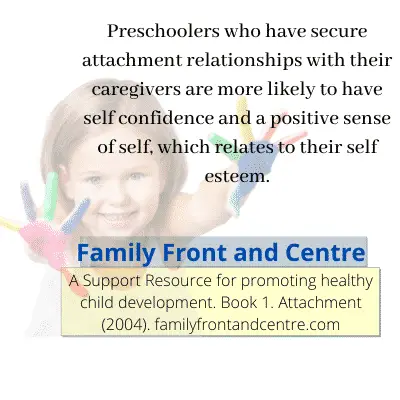
There are a number of factors that may affect child self-esteem, according to the Family Front and Centre: A Support Resource Promoting Healthy Child Development, published in 2004. These factors include environmental factors such as family and events in the family such as divorce or abuse. There are also factors such as the child’s personality and sensitivity that play a role in a child’s self-esteem.
The Effects Environmental Factors Such As Family Have On Child Self Esteem
The family environment is very important to a child. Boosting your child’s self esteem begins at home. Ideally, a loving and secure environment with parents who understand and provide a child’s emotional needs such as love, encouragement, sympathy and physical needs such as food, clothing and a secure home will help your child’s well-being.
Environmental factors which can have a negative impact on a child include divorce, abuse and death within the family. Basically, stressful events which cause sudden change affect your child negatively, whereas stability and security have positive affects on your child’s well-being.
Parents and those in the family who have contact with the child are so important to the development of a child’s well-being. A major part of our self esteem comes from trusting others and feeling valued and deserving of love. This is something that is experienced and learnt in childhood and shapes adult life. If parents hurt the child verbally, physically or mentally this may cause the child to feel worthless and may destroy trust in others. Neglect and abuse are the most extreme examples of the damage and hurt that can be done to a child and this can often cause life-long problems.
Even more than ever I believe that the importance of teaching life skills to young people should not be ignored. One of the most important of these skills is self esteem. Boosting your child’s self esteem is, therefore, your responsibility.
Using Family Photos To Build your Child’s Self Esteem
One powerful yet hidden aspect of family photography that parents and photographers might not think about too much is that it can assist us when it comes to raising kids with stronger confidence in their own abilities and worth. Experts and psychologists have actually done quite a bit of work in past decades. They have explored the benefits of family photos for your child’s self esteem.
Many parents are unaware of the importance of family photos and how powerful they can be as a tool for raising the self esteem of children. If you have never considered the benefits of family photos for your child’s self esteem before, then I have some very helpful information and guidance for you here.
How can family photos boost your child’s Self Esteem? In the early years of a child’s life the need to acquire a sense of belonging is strong. Family portraits show your child that he/ she is an important member of a family who is loved. Family photos help shape the personal identity and help your child to feel secure (source: Linda Good, 2005. Childhood Education.)
There is, of course, much more to consider than the brief description above. In what follows we will take a look at the research behind this. We will also look at ways that you can use the benefits of family photos for your child’s self esteem. Not only will this help your child to build a healthy level of self esteem and confidence, it will also help you to build a stronger family.
The Family Unit and its Importance to your Child’s Self Esteem

Family photographs are important to the self-esteem of a child. This is because it allows the child to see himself as an important and valued part of the family.
According to Scott and Cameron, in an article in the journal developing practice, the development of identity and belonging is very important if children are to build healthy self esteem. Family photos are one way to promote this sense of belonging and therefore can improve a child’s self esteem.
Putting family portraits where the child can see them, for example in the hallway or main areas of the house will reinforce the message that the child is wanted and is important in your life.
One of the worst things that can happen to a child is to feel ignored. Neglect is very damaging to any child and can be a root cause of problems both during and after childhood. As a responsible parent you will want to include your child in as many family events as you can. However, your child’s self esteem is formed early on with a sense of belonging to a family unit.
Very early in a child’s life the family comes to mean a safe place where the child understands his place. The bond between your child and you strengthens with photos that show this strong bond. This is why there are so many family portraits in the home.
One of the major benefits of family photos for your child’s self esteem is the fact that it tells the child that you are thinking about them and are proud of them. Family photos are pictures to show others or hang on walls which means the child knows he is wanted and loved. This is very comforting for the child.
An unloved and neglected child may wonder why parents do not love him or her, and may decide that it is their own fault for some reason. This can cause low self esteem issues and deep unhappiness. If family photos are a display of love, then it is easy to understand that they can improve a child’s self esteem.
Benefits of family photos: providing a sense of security
One job of a portrait photographer is to make the photo a space for the child where they’re protected and safe. Kids seem to get this on a really basic level. This also holds true if it’s a painting from a photo. Many parents decide to make the image extra special by having a digital photo made into a painting format.
Paintings are extra special in a child’s eyes, because it is art and expresses feelings. It takes more time and effort to produce a painting than to take a photo. Again children just seem to get this.
Does it make any difference whether the photo is on paper or in digital format?
It should be obvious that rather than printing and displaying family photos, people tend to increasingly stick with the digital form, whether it’s on a laptop, Facebook, or some other device. However, does a digital image have the same impact when it comes to boosting the self-esteem of a child? A lot of psychologists don’t think so. However, it’s easy to change that digital picture to painting form.
Family photos should be placed somewhere in the home where a device doesn’t need to be turned on in order to view them. This will truly offer a child both comfort and reassurance while telling them something about the importance of their place in the family.
When thinking about the benefits of family photos for your child’s self esteem it is important to consider where to place these family portraits in the home. One great place to put them is in the child’s bedroom as it is a place where the child feels safe. The child will see the photo every day and even before sleeping or getting up in the morning. This will be a constant reminder that your child is loved, and this is the basis of self esteem.
What Can Parents Do to Foster Self-Esteem Using Family Photos?
Here’s another helpful strategy you can use to enhance the benefits of family photos for your child’s self esteem. The idea is to get the child more involved in the creation of their photos. Encourage your child to create a personal photo album as a celebration of their place in the family and activities shared together. Because the child has had a role in creating the photo, it will be more personal and, therefore, special for them.
Make sure to use the technology we have now to your advantage. Digital photography has made it possible to display different photos in digital format. Choose a suitable digital photo frame and then let your child choose the photos for it. Again, this inclusion in the photo creation process can work wonders and improve your child’s self esteem.
Family photos as a way to encourage your child to express their feelings
Parents might also ask their kids what aspects of the images that they like or don’t like. This allows the children to share their stories, feelings, and thoughts that the images evoke in the child.
Sharing thoughts and feelings with and listening to your child is priceless! In effect, you are encouraging your child to communicate which is a valuable skill in itself. This will benefit your child in later life. Also, by asking for your child’s thoughts you are showing your child that you respect them as a person. The result is a boost in your child’s self esteem.
The above can boost self esteem on a longer term basis if you do this regularly.
If you use family photos to spark conversations with your child and others then this will make the home a safe place to discuss and share ideas. The child is then more likely to take this outgoing and confident behaviour out into the world where the child will appear more confident.
Get your child more involved in the creation of family photos
Another way to get them involved is to have them take part in the process before these photos are taken. Ask them for ideas about the clothes they should wear and where the photos should be taken.
Take every opportunity to involve your child in the photo process. This will increase the effect these photos will have on their self esteem. Imagine a parent who never asks his child to get involved, or just tells the child everything he or she should do. The result can be very unfortunate, and the child will almost certainly lack confidence.
As a parent, you help shape and maintain your child’s self esteem. Use the opportunity to make family photos one of the things that will help your child and your family bond.
Personality Factors
Some children have a sensitive nature and depend on those looking after them for emotional and psychological support. Sensitive children need extra care and support from parents and others in close contact with them. Boosting your child’s self esteem can be difficult in this case, but extremely important.
Sensitive and over-dependent children can be hurt deeply if they feel those looking after them are disappointed in them. They may feel worthless and may learn that how they feel depends on what others think. This can cause them to focus on pleasing others. Perfectionism is a characteristic which can develop from the need to please others and this is damaging to one’s self esteem.
When Does A Child Develop Self Esteem?
The development of self esteem begins in the baby and continues through childhood. It should be obvious that parents and those looking after the baby play an important role. Also, a child learns from comments others make and begins to value him/ herself (Searcy, 2007). For example, if a child is told he is clever, he begins to believe it is true. On the other hand, if a child is told he is bad or useless then his self worth may suffer. If this continues it can affect the child into adolescence and beyond.
As above, even from a young age, children can begin to form ideas about their appearance. This often comes from what others tell them. A child may believe he/ she is fat, simply because of a comment someone made without thinking. If you start boosting your child’s self esteem early you can instill strength and confidence which will protect your child from negative comments.
It is the duty of the mother or father to provide a son or daughter with the best weapon they could possible have to face all that life will throw at them. Self esteem can be taught!
Research shows that high self esteem can help with positive focus and happiness. If a child is happy and can concentrate positively he or she is much more likely to be more successful at school and in relationships. On the other hand low self esteem can lead to depression and all the problems that may bring.
Learn more about how to help your child develop self-esteem (Healthychildren.org)
What Are The Signs of Low Self Esteem In Children?
- Problems making friends or social problems with other children.
- Bad behaviour including anger, tantrums etc.
- Bullying others.
- Aggressive behaviour or violence.
- Depression and anxiety.
The Dangers of Low Self Esteem in Children
According to the National Institute of Mental Health suicide was the third highest cause of death of young people aged 15 to 24. That statistic comes from 2007 but the figure is growing. Depression is a big cause of this and low self esteem is therefore something parents should be aware of in their children. You as a parent can do so much to help your child and I’d like to give you a number of tips for things that you can do to help your child be more confident.
| Testimonial: “Keep on doing the good work that you are doing because really you are saving lives.” Joy |
How to Boost Your Child’s Self Esteem
1. Show Appreciation To Your Child
A child’s self esteem will suffer if he or she is not appreciated. Children know if you are sincere or not. If you spend time together it must be enjoyable for both of you or there is no point. Show appreciation for your child at all times. Tell your child you love him or her – this is priceless to you child! Thanking a child when he does something good is reward enough. Children like to please.
Take an interest – as one of the most important people in your child’s life, the fact you are interested in what matters to your child shows that you love and respect him or her. Showing an interest also means taking the time to encourage and comment positively on things that interest your child. You are also giving your child the opportunity to express him/ herself and discuss the things that are important to him or her. You are also teaching your child how to take an interest in others and this will help them to make friends and genuinely make better relationships. This is one of the best ways of boosting your child’s self esteem.
Here are some more great ideas how to help your child (from Huffington Post).
2. Give Your Child Regular Encouragement
Encouragement boosts self esteem. Encourage decision-making, this will lead to a feeling of confidence and independence.
Always try to comment positively. As a parent you have great influence over your child. A young child needs to hear your approving words and this will make him or her feel appreciated and wanted. Life is made so much harder if a child has been brought up with negativity. Whenever your child does something well, congratulate him/ her.
Cuddle and encourage – showing affection is a healthy way to show your child how special they are and that you love them. It is very important for parents to show affection so that the child not only feels loved, they will be able to show affection to others too. Support from a parent should give confidence and help your child understand that others understand and want to help. A child who does not experience encouragement and affection may grow up to be a lonely person who struggles with relationships.
3. Praise Your Child When They Succeed
Self esteem comes from what you think about yourself, but praise is external. I do not agree entirely with some who say praise makes kids become addicted to it and then needing praise to feel good.
Encouragement, I believe, is better than praise. I was often told that I “could do better” and this lead me to feel no matter what I did it would not be good enough.
Reward your child’s effort and don’t talk about success or failure. The important thing to teach your child is that effort and trying is important. Always notice and comment on effort in a positive way. An important lesson is that hard work pays in the end. Success is the end result of hard work and the inevitable mistakes that we must make on the road to success.
Praise good behaviour – often parents focus on what is wrong and this means they concentrate on bad behaviour. Try focusing on the positives. Concentrate on good behaviour, and reward that, and you’ll see a massively positive effect on your child.
4. Respect Your Child
Your child’s self esteem will be higher if you treat him or her seriously and with respect. Explain everything to your child and treat him as an intelligent individual able to understand and reach conclusions. You want to be treated like this and children are no different. A child who is belittled, patronized or put down will suffer from low self confidence. Mutual respect will foster trust and confidence.
Listen rather than talk. Your young child needs to express him/ herself and you should listen and try to understand. By doing this you are teaching that communication means being open to the ideas of others. You are giving your child time to form his or her ideas and discuss. You are showing that these ideas are important to you and will not be ignored.
Encourage communication and discussion. When you do this you are showing that you value the viewpoint and ideas of your young child. This will be a huge confidence boost for them and will encourage them to be open and expressive later on in life. Modern society encourages discussion, cooperation and self expression and this can only be good for your child.
5. Help Your Child Deal With Setbacks Confidently
If the child fails he must not feel a failure. Teach a child failure doesn’t exist, there are only temporary setbacks on the road to success. Never tell a child he has failed, let you down or cannot succeed. Be a mentor and help the child to believe in his or her ability to succeed no matter how long it takes!
Discuss mistakes that your child makes. Help him/ her to see them as stepping stones to learning. Always discuss what lessons can be learnt from the experience of making a mistake and ensure that you discuss the difference between a mistake and failure. Let your child discuss with you how to avoid the mistake again and how he can approach the challenge in a different way next time.
The most important thing to teach is that no-one succeeds without making mistakes and that the fear of making a mistake should never prevent us from trying. Young people have a natural approach to life which involves jumping in and learning by making mistakes so encourage your child to use this but discuss the need to think about possible consequences of our actions.
Discuss your own mistakes and how you cope. Parents should teach by example, and so when a child sees that even his parents can make mistakes he or she understands that mistakes are natural and not something to be ashamed of. Equally, it is important for the parent to show how to cope with mistakes in a constructive way.
Something only becomes a mistake when you accept it as such and then your reaction to it is important. Mistakes can be seen as positive steps towards doing something right. We move closer towards success when we discover which ways do not work. Confidence grows when you are not afraid of making mistakes. When your child learns that mistakes can be corrected and can provide valuable lessons then this will create a much more positive attitude and increased self esteem and confidence.
Focus on the positive. It is so important to show that a positive attitude can lead to happiness and success. Draw your child’s attention to the good in any situation so that he/ she realises there is always a choice how we see events that happen to us.
Being positive will create a healthy family atmosphere. This kind of atmosphere creates security and if a child learns how to see the positive even in the most difficult situations, this will make the world a much better place to live. This will breed confidence.
Low self-esteem is sometimes cited as an underlying reason for young people to turn to teen alcohol abuse. So please watch out for this in teenagers and as your child grows to be a young adult.
I hope you find the tips on this page helpful, and I hope you understand how important it is to say and do the right things to create an environment and a relationship that will turn a child into someone who has the gift of self esteem and confidence. This is the biggest gift you could ever give to your child. Good luck!
References
- Harvard University Website. Neglect. Accessed from: https://developingchild.harvard.edu/science/deep-dives/neglect/
- Huffington Post. (2017). Five Ways to better Appreciate Your Kids. Accessed from https://www.huffpost.com/entry/five-ways-to-appreciate-y_b_2879259
- Linda Good (2005) Snap it Up!: Using Digital Photography in Early Childhood, Childhood Education, 82:2, 79-85, DOI: 10.1080/00094056.2006.10521351
- Public Health Agency of Canada. (2004). Resource book 1: Attachment. Family front and centre: A support resource promoting healthy child development. Accessed from https://www.canada.ca/content/dam/phac-aspc/migration/phac-aspc/hp-ps/dca-dea/publications/ffc-ief/assets/pdf/ffc_attachment.pdf
- Scott, T., & Cameron, S.L. (2004). Identity, Self-esteem, and the Use of Life Books for Children and Young People in Care.
- Searcy (2007). Placing the Horse in Front of the Wagon: Toward a Conceptual Understanding of the Development of Self-Esteem in Children and Adolescents. Child and Adolescent Social Work Journal, Vol. 24, No. 2, pp 121-131
